
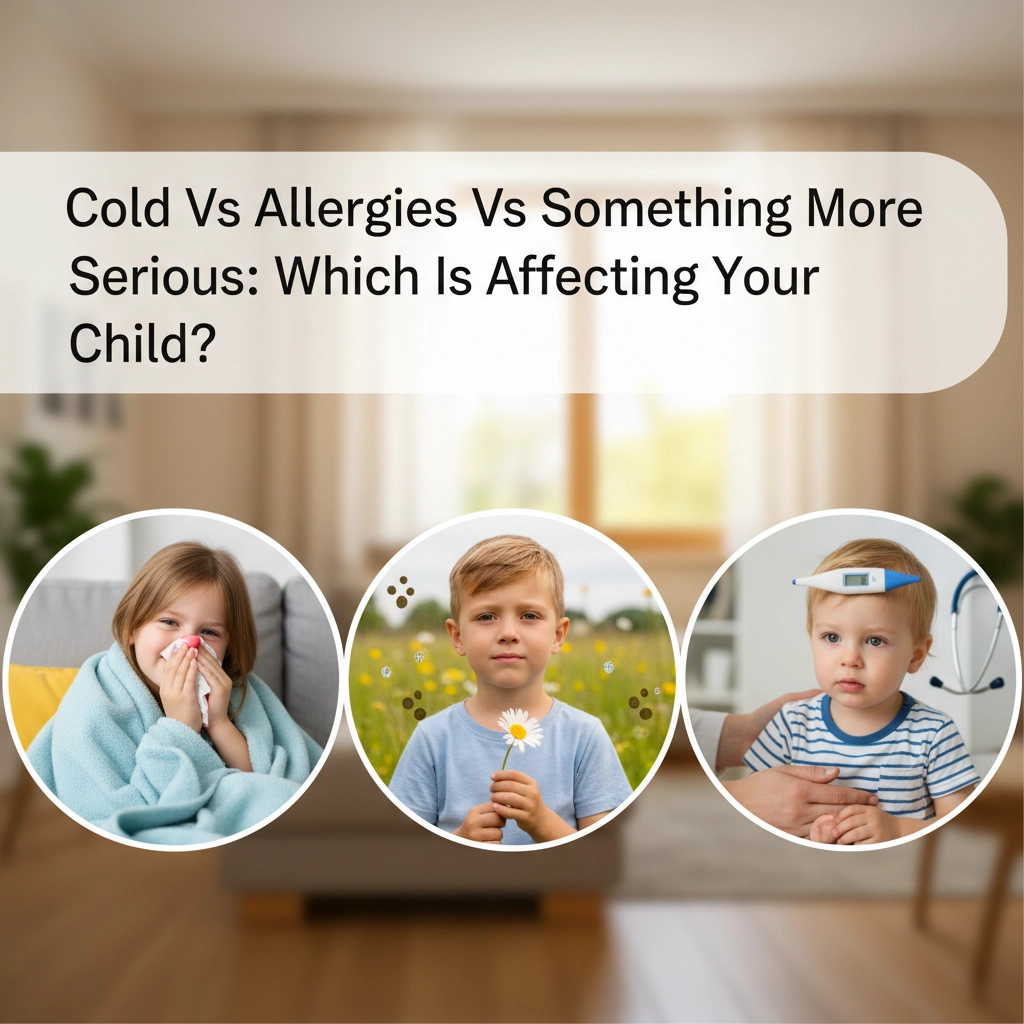
Picture this: It’s 2 AM, and you’re awake again because your little one is coughing, sniffling, and generally miserable. You’re staring at the ceiling wondering, is this just another cold making the rounds at daycare? Could it be those seasonal allergies everyone’s been talking about? Or (and this is the thought that makes your stomach flip) could it be something more serious?
If you’ve been there, you’re definitely not alone. We see worried parents every day trying to decode their child’s symptoms, and honestly? It can feel like you need a medical degree just to figure out if you should grab the tissues or head to urgent care.
Let’s play detective together and break down the clues your child’s body is giving you. By the end of this, you’ll feel way more confident about what’s going on and when it’s time to give us a call.
Your Child’s Body is Telling a Story, Let’s Read It Together
Think of your child’s symptoms like a puzzle. Each piece, the timing, the type of mucus (I know, glamorous topic!), the presence or absence of fever, gives us important clues about what’s really going on.
The most important thing to remember? You know your child better than anyone. If something feels off, even if you can’t put your finger on exactly what, trust that instinct. We’re always here to help figure it out together.
The Great Cold vs. Allergies Mystery
Timing Tells the Tale
Here’s your first big clue: colds sneak up gradually, while allergies hit like a switch being flipped. If your child seemed fine at breakfast but by lunchtime was sneezing and rubbing their eyes after playing outside, you’re likely looking at allergies. Colds, on the other hand, start with that subtle “something’s not quite right” feeling and build up over a few days.
Duration is your friend here, too. Colds typically wave goodbye after 7-14 days (though it might feel like forever when you’re dealing with a cranky, stuffy kiddo). Allergies? They stick around as long as your child is exposed to whatever’s bugging them, potentially weeks or even months.

The Fever Detective Work
This one’s huge: allergies never, ever cause fever. If your child has a temperature, you can cross allergies off your list. That fever is your child’s immune system fighting off a viral invader, classic cold territory.
No fever but still worried? Keep reading, we’ve got more clues to uncover.
The Not-So-Glamorous Mucus Investigation
I know, I know, nobody signed up to become a mucus expert when they became a parent (but here we are!). The good news is that what comes out of your child’s nose is actually super helpful in our detective work.
Cold mucus: Thick, yellow, or green, basically, it looks like it means business
Allergy mucus: Clear and watery, almost like your child’s nose is just constantly running
Think of it this way: cold mucus is like your body’s cleanup crew working overtime, while allergy mucus is more like a leaky faucet that won’t turn off.
The Tale-Tell Eyes
Here’s a dead giveaway: if your child is constantly rubbing itchy, watery eyes, we’re almost certainly dealing with allergies. Colds rarely cause the kind of eye irritation that has kids looking like they’ve been chopping onions all day.
Watch for that telltale eye-rubbing motion; it’s like your child’s body is waving a little allergy flag.
When Your Spidey Senses Should Start Tingling
Sometimes what starts as “just a cold” or “probably allergies” can signal something that needs more attention. Here’s when you should definitely give us a call (and don’t worry about being “that parent”, we’d rather see you ten times for nothing serious than miss something important once):
Breathing Changes That Need Attention
Watch for these red flags:
- Wheezing sounds when breathing
- Rapid or labored breathing
- Complaints of chest tightness
- Shortness of breath during normal activities
These can signal asthma, which can be triggered by both colds and allergies. The good news? Asthma is totally manageable once we know what we’re dealing with.

The Symptom That Won’t Quit
If symptoms hang around longer than two weeks or seem to be getting worse instead of better, it’s time for a chat with us. Sometimes what starts as a simple cold can invite unwelcome bacterial visitors to the party, and we might need to send them packing with some additional treatment.
Fever That Means Business
While low-grade fevers with colds are normal, high fevers (especially over 101°F in children over 3 months) or fevers that return after breaking deserve our attention. This could signal a secondary bacterial infection that needs treatment.
Your Action Plan: When to Watch, When to Worry, When to Call
The “Let’s Keep an Eye on This” Category
- Clear, runny nose with sneezing (especially if seasonal or after outdoor play)
- Mild cough without breathing difficulty
- Low-grade fever with typical cold symptoms that’s improving
- Symptoms lasting less than 10 days and gradually getting better
The “Time to Give Us a Ring” Category
- Symptoms lasting more than two weeks
- High fever or fever that comes back after breaking
- Thick, green nasal discharge with facial pain or headache
- Any breathing difficulties or wheezing
- Your gut is telling you something’s not right (seriously, trust this!)

The Local Angle: What We’re Seeing in Our Community
Here in the Upland area, we typically see seasonal allergy spikes in spring and fall, with different plants and trees causing trouble at different times of the year. If your child’s symptoms seem to follow a pattern with the seasons, allergies are likely the culprit.
We also know that certain schools and daycare centers sometimes have little outbreaks of the same cold virus making the rounds. If half your child’s class is sniffling, odds are good you’re dealing with a viral visitor.
Making Peace with the Unknown
Here’s something that might help you sleep better tonight: most childhood respiratory symptoms are caused by common, manageable conditions. Yes, it’s stressful when your little one isn’t feeling well, but the vast majority of the time, we’re dealing with routine colds or seasonal allergies that respond well to basic care and time.
That said, never hesitate to reach out if you’re unsure. We’re here to be your partners in this parenting journey, not just when things go wrong, but to help you feel confident and informed along the way.
Your Next Steps
If you’re reading this at 2 AM, wondering what to do (we’ve all been there!), Here’s your game plan:
- Take a symptom inventory: Fever? Type of mucus? Eye involvement? Duration so far?
- Trust your instincts: If something feels different or concerning, that matters
- Give us a call during business hours to discuss what you’re seeing: we’re always happy to help you sort through the clues
- Don’t second-guess seeking care: We’d much rather see you for peace of mind than have you worrying at home
Remember, parenting doesn’t come with a manual, but you don’t have to figure everything out alone. We’re here to support you and your family through all the sniffles, sneezes, and sleepless nights.
Whether it’s a common cold, seasonal allergies, or something that needs a closer look, we’ll work together to get your little one feeling better and give you the confidence to handle whatever comes next. Because at the end of the day, that’s what community healthcare is all about: being there for each other when we need it most.
Ready to solve the mystery of your child’s symptoms? Give us a call or learn more about our pediatric services: we’re here to help you every step of the way.